
 Deutsch
Bidirectional Charging: Why EVs as Storage Are Primarily a Data Challenge
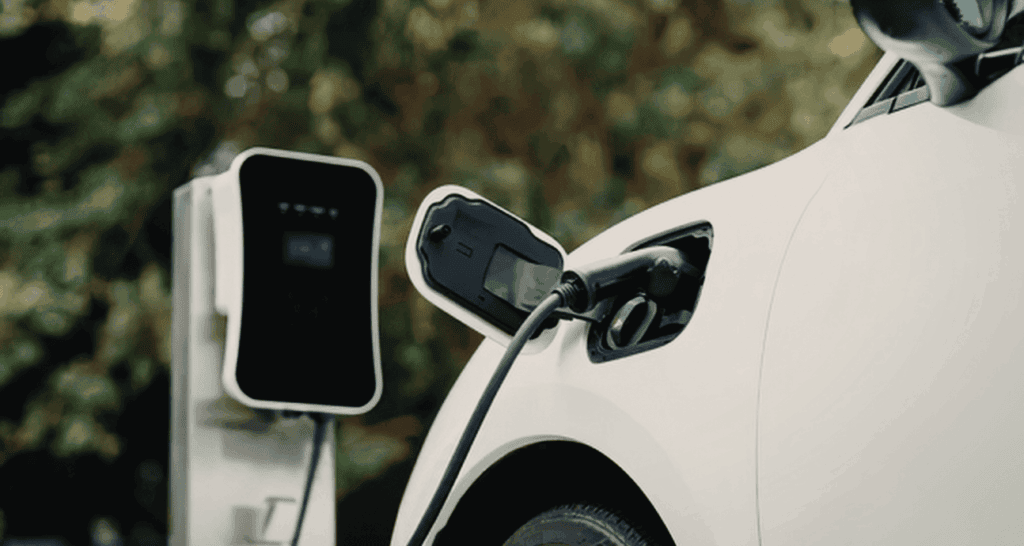
On average, an electric car remains stationary for most of the day. During this time, it carries a battery that can store more energy than a household consumes in a single day. It is therefore logical to not only charge these batteries but also to feed electricity back when needed.
This is exactly what the Association for Electrical, Electronic Information Technologies (VDE) is currently investigating in two research projects funded by the German Federal Ministry for Economic Affairs. The VDE views bidirectional charging as a key technology for the energy transition. At the same time, the association makes it clear that the path from pilot project to mass market does not depend on larger batteries.
The decisive factor is whether vehicles, charging points, buildings, and the power system communicate reliably with one another. Bidirectional charging is therefore less a question of power electronics and more a question of data and interfaces.
What is bidirectional charging?
With conventional charging, electricity flows in only one direction, from the grid into the vehicle battery. With bidirectional charging, the battery can also release energy, for example to a building or to the power grid. In technical terms, this is referred to as Vehicle-to-Home, Vehicle-to-Building, or Vehicle-to-Grid.
This allows a vehicle to absorb excess solar or wind power while stationary and provide this energy again later. A pure consumer thus becomes a temporary storage unit.
What are the BiFlex-Industrie and PeakSaver projects investigating?
On September 10, 2026, the VDE presented two research projects that examine different aspects of the same problem.
BiFlex-Industrie: Bidirectional fleets in everyday business
In the BiFlex-Industrie project, bidirectional electric vehicles are being tested at corporate sites together with industrial and research partners. The study investigates the benefits that bidirectional vehicle fleets offer for companies and the power system, as well as the requirements for energy-related business models. The project’s final conference is scheduled for November 18, 2026, in Berlin.
PeakSaver: Vehicle data for energy management processes
The PeakSaver project starts one level deeper. The goal is to make measurement and status data from electric vehicles usable for the energy industry in a standardized and secure manner—for purposes such as balancing, billing, and the marketing of flexibility. This should enable vehicles to be integrated into energy and flexibility markets in the future, regardless of the charging location.
Important for context: Both projects are investigating requirements. A widespread commercial application cannot yet be derived from them.
Why is an EV not a stationary storage unit?
At first glance, a vehicle fleet looks like a distributed battery storage system. However, the difference from a large-scale storage system is fundamental. A stationary storage unit is permanently connected at the same location and is operated exclusively for the energy system. An electric vehicle, on the other hand, is primarily a means of transport.
Vehicles constantly change their location and state of charge. For use within the energy industry, it must therefore be known at all times whether a vehicle is connected and how much energy it can actually provide. Additionally, there is the most important constraint: users must be able to rely on their vehicle being sufficiently charged at the planned time.
This results in a calculation task that must be re-evaluated constantly for every single vehicle. Available flexibility is not the battery capacity, but rather the portion that remains until the next departure after deducting a minimum state of charge.
This is precisely where bidirectional charging becomes a data issue. Without reliable, up-to-date information from the vehicle and the charging point, this flexibility can be neither planned nor marketed.
Why do standards determine the breakthrough?
For bidirectional charging to grow beyond individual pilot projects, many different systems must work together. The chain extends from the vehicle and the charging infrastructure to energy management in the building and the actors in the energy market. Different manufacturers and systems are often involved at each of these points.
The VDE therefore calls for internationally harmonized standards and end-to-end interoperability along the entire value chain. The association identifies several families of standards as technical foundations:
- ISO 15118 regulates communication between the vehicle and the charging device.
- IEC 61851 describes requirements for the charging infrastructure.
- IEC 63110 concerns the digital management and control of charging infrastructure.
For energy companies, this point is central. As long as every combination of vehicle, wallbox, and control system requires its own integration, bidirectional charging remains an isolated project. Only standardized interfaces make it possible to bundle hundreds or thousands of vehicles as a shared flexibility resource.
The parallel to other areas of the energy transition is obvious. For large-scale storage, PV parks, and flexible consumers, the challenge is also increasingly shifting from the construction of individual plants to their digital integration. We described why this also applies to the grids in our article [Why grid expansion alone no longer supports the energy transition].
Why are corporate fleets the first realistic use case?
Not every electric car is equally suitable as a source of flexibility. Private vehicles are often used irregularly and charged at varying locations. This makes their availability difficult to predict.
The situation is different for corporate fleets. Company cars, delivery fleets, or pool vehicles often have fixed locations and predictable operating times. Many are connected to the same charging infrastructure overnight or during working hours. This predictability is exactly what is missing for a reliable flexibility forecast when vehicles are considered individually.
For companies, the benefits can be seen on two levels. At their own site, peak loads can be smoothed and self-generated solar power can be utilized more effectively. Beyond the site, the fleet can potentially provide flexibility for the power system in the future, provided that market rules and billing allow for it.
It is therefore no coincidence that BiFlex-Industrie focuses specifically on corporate sites. This is where predictable idle times meet the economic self-interest of the companies.
What does this mean in practice?
Bidirectional charging is still in a phase of pilot projects and standardization. An immediate economic effect for energy companies cannot yet be reliably quantified today. Nevertheless, the direction is clear: with growing electromobility, an additional, decentralized source of flexibility is emerging alongside stationary storage and controllable consumers.
Those who only react once standards and market rules are fully established will be starting their data work too late. Several starting points can be addressed right now:
Understand data flows. What information from vehicles and charging points is already available today, and in what format? Often, this inventory alone shows where gaps are occurring.
Plan interfaces openly. For new charging infrastructure or energy management projects, it should be checked whether the systems used support the relevant standards. A proprietary isolated solution may be cheaper today but will be expensive later.
Consider billing and balancing processes. When vehicles feed power back, it must be traceable when and how much energy flowed and to whom it is attributed. This is not purely a technical question but affects customer contracts as well as market processes.
The next stage of the energy transition is not created by individual new plants, but by the intelligent connection of many different assets. Electric vehicles are a particularly demanding example of this because they are mobile and primarily serve their users.
We work daily to connect data and processes in the energy industry so that individual systems become a controllable whole.